 Business License

Achieving Low Residual Moisture Content in Industrial Salt Crystallization Processes
The Importance of Low Residual Moisture Content
In industrial crystallization and salt production processes, achieving low residual moisture content in centrifuge discharge products is an important objective for improving product quality, reducing operating costs, and enhancing overall process efficiency.
A lower moisture content in the final solid product provides several key advantages:
• Improved Product Quality and Stability
Lower residual moisture helps improve product purity, storage stability, and handling performance. Products with reduced free moisture are less likely to experience caking, agglomeration, or quality deterioration during storage and transportation.
• Reduced Drying Requirements and Energy Consumption
A centrifuge cake with lower moisture content significantly reduces the load on downstream drying equipment. This can decrease thermal energy consumption, reduce equipment requirements, and improve overall energy efficiency.
• Higher Product Recovery
Efficient solid-liquid separation reduces the amount of valuable product lost with the mother liquor retained in the wet cake. This improves product recovery and maximizes production efficiency.
How to Achieve Low Residual Moisture Content
Recently, one of our customers raised a question regarding the feasibility of achieving 3–5% residual moisture content in centrifuge discharge salt, as some centrifuge suppliers indicated typical moisture levels of 25–30%.
Based on our project experience, we would like to share our technical understanding that the final moisture content is not determined by the centrifuge equipment alone. It is the result of the integrated performance of the complete crystallization and solid-liquid separation system, including crystal characteristics, process design, centrifuge selection, and operating conditions.
1. Crystal Characteristics
Crystal size, morphology, particle size distribution, and surface properties have a significant influence on dewatering performance. Well-developed crystals with suitable physical characteristics generally provide better drainage channels and more effective solid-liquid separation.
2. Crystallization Process Design
A properly designed crystallization process is essential for producing crystals with excellent separation properties. Key parameters, including supersaturation control, residence time, cooling or evaporation conditions, and crystal growth conditions, must be carefully optimized to achieve favorable crystal characteristics.
3. Centrifuge Technology and Operating Conditions
Different centrifuge technologies, including pusher centrifuges, peeler centrifuges, and other high-efficiency centrifuges, have different separation capabilities. With appropriate equipment selection and optimized operating parameters, significant moisture reduction can be achieved.
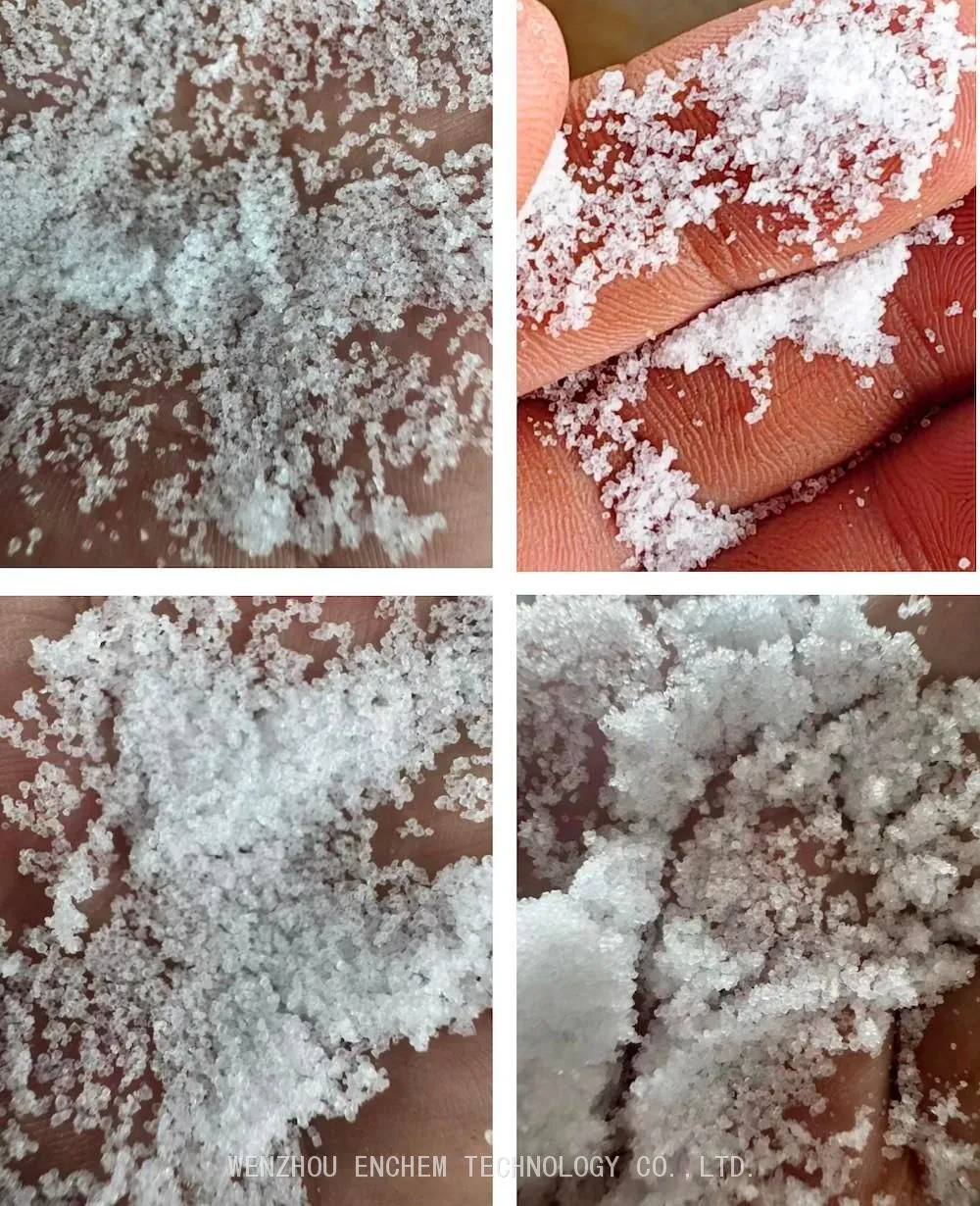
Low moisture content in the centrifuge discharged salt
Low Moisture Salt Production Through Integrated Process Optimization
For various inorganic salt production applications, including barium chloride (BaCl₂), ammonium chloride (NH₄Cl), sodium chloride (NaCl), Sodium sulfate (Na2SO4) and other crystallization processes, achieving 3–5% residual moisture content after centrifugation is technically feasible when the complete process system is properly designed and optimized.
At Enchem Technology, we believe that successful crystallization projects require a comprehensive approach integrating:
• Advanced crystallization technology;
• Crystal growth control;
• Optimized centrifuge selection;
• Process parameter optimization;
• Complete system integration.
Through this integrated approach, we help our customers achieve stable operation, reliable product quality, reduced energy consumption, and optimized production performance.
Recently Posted
-
Can MVR Evaporators Be Used for Calcium Chloride Concentration?
September 3, 2026Calcium Chloride Evaporation & Concentration SystemsCalcium chloride (CaCl₂) is widely used in industrial applications and is Read More
 -
MVR vs TVR: Efficiency, Cost, and Application Guide
September 2, 2026In the industrial evaporation field, energy-saving technologies have become critical for reducing operational costs and minimizing
Read More -
Successful Commissioning of the Potassium-Sodium Separation Four-Effect Evaporator
September 2, 2026OverviewWe are delighted to announce the successful commissioning of the Potassium–Sodium Separation Four-Effect Evaporator System
Read More -
OSLO Crystallizer – Efficient Fluidized Bed Design for Large Crystal Growth
September 2, 2026OverviewIn industrial crystallization processes, crystallizers are commonly classified according to their circulation mechanism an
Read More

Contact Us
Recommended Products
-
 Titanium Triple-effect Evaporator for Lithium Battery RecycleNegotiableMOQ: 1 Set
 -
Four-effect Falling Film Evaporator for Coffee Extract ConcentrationNegotiableMOQ: 1 Set
-
MVR Evaporator for Dyeing Wastewater TreatmentNegotiableMOQ: 1 Set
-
MVR Evaporator for Landfill Leachate TreatmentNegotiableMOQ: 1 Set
-
Triple-effect Forced Circulation Evaporator for Cobaltous Sulfate RecoveryNegotiableMOQ: 1 Set
-
Double-effect Countercurrent and Falling Film Evaporator for Caustic Soda ConcentrationNegotiableMOQ: 1 Plant
-
Double-effect Forced Circulation Evaporator for Calcium Chloride ConcentrationNegotiableMOQ: 1 Set
-
MVR Evaporator for Smelting Wastewater TreatmentNegotiableMOQ: 1 Set
-
Triple-effect Forced Circulation Evaporator for High Salinity Wastewater TreatmentNegotiableMOQ: 1 Set
-
Double-effect Central Circulation Evaporator for Metallurgy Effluent TreatmentNegotiableMOQ: 1 Set
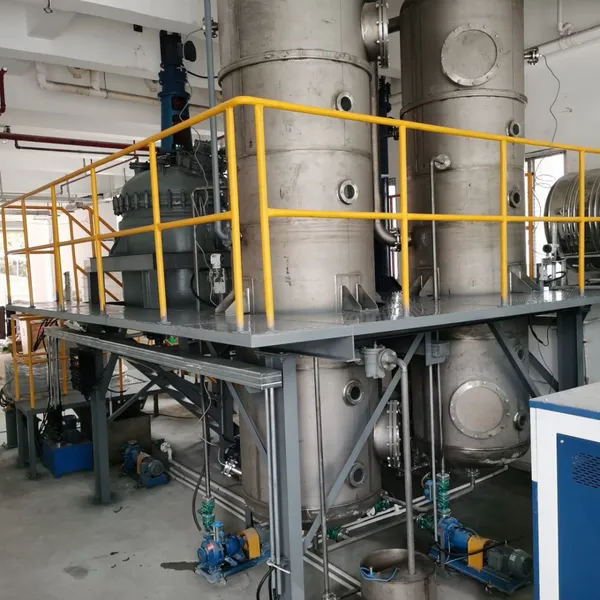
-
Triple-effect Forced Circulation Evaporator for Mix Salt Wastewater TreatmentNegotiableMOQ: 1 Set
-
MVR Evaporator for Bio-pharmaceutical Wastewater TreatmentNegotiableMOQ: 1 Set
-
Calcium Chloride Solution Preparation and Refining PlantNegotiableMOQ: 1 Set
-
Vacuum Decompression Concentrator (Tank)NegotiableMOQ: 1 Set
-
Ammonium Sulfate Crystalline Powder Evaporation and Drying PlantNegotiableMOQ: 1 Set