 Business License

DTB (Draft Tube Baffle) Crystallizer Guide: Design, Process, and Uses
When classifying crystallizers based on the circulation mode of the material, the most common types include external circulation crystallizers (FC type), DTB (Draft Tube Baffle) crystallizers, and OSLO crystallizers.
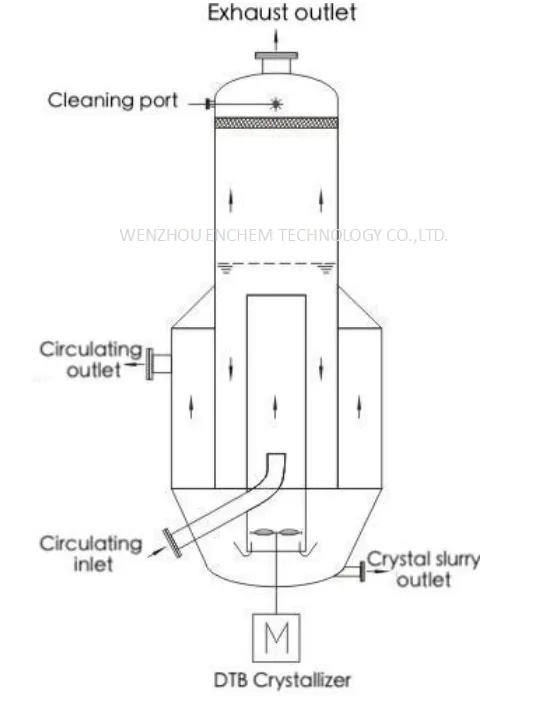
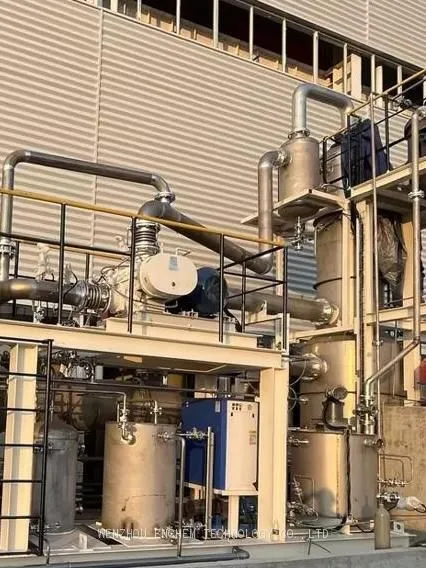
The DTB (Draft Tube Baffle) crystallizer is a high-performance internal circulation crystallizer designed for applications requiring large, uniform, and high-purity crystals. With its precise control of supersaturation and integrated classification mechanism, the DTB crystallizer is widely used in food, pharmaceutical, and fine chemical industries.
Structure and Working PrincipleCore Components:
• Draft Tube: Centrally positioned in the crystallization chamber, it directs the upward flow of slurry, forming a strong forced circulation.
• Annular Baffle Plate: Creates an outer settling zone that allows larger crystals to settle, while smaller crystals and mother liquor continue to circulate, facilitating effective particle size classification.
• Vacuum Evaporation or Cooling System: Induces supersaturation through solvent evaporation or temperature reduction.
• Elutriation Column: Located at the bottom, it uses hydraulic classification to separate product-size crystals from fines.
Working Cycle:
1 – Thermally saturated feed is continuously introduced at the bottom of the circulation pipe.
2 – The feed mixes with mother liquor containing fine crystals and is pumped through a heater.
3 – The heated solution enters the bottom of the draft tube and is circulated upward by a slow-speed propeller.
4 – Supersaturation occurs near the liquid surface via evaporation or cooling, causing crystal growth on suspended particles.
5- Larger crystals settle in the annular zone outside the baffle, while fines re-enter the circulation loop for further processing or dissolution.
6- Crystals at the crystallizer bottom enter the elutriation column, where undersized crystals are returned, and qualified product crystals are discharged.
Operational Features
• Uniform supersaturation and stable growth environment support the production of large crystals (600–1200 µm).
• Efficient crystal classification via the annular baffle and elutriation column reduces fines and improves product quality.
• High productivity and low scaling risk enable long-term continuous operation.
Application ScenariosThe DTB crystallizer is ideal for industries requiring consistent, coarse crystals with high purity:
• Food Industry: Sucrose and other sweeteners
• Pharmaceuticals: Antibiotics and specialty APIs
• Inorganic Chemicals: Potassium nitrate, ammonium sulfate, citric acid
ConclusionThe DTB crystallizer offers excellent control over crystal size distribution and product purity. Its robust internal circulation design and integrated classification system make it a preferred solution for demanding crystallization processes across various industries.
Recently Posted
-
Comparison of DTB, Oslo, and FC Crystallizers: Principles, Characteristics, and Applications
August 12, 2026AbstractIndustrial crystallization is widely used in chemical, fertilizer, pharmaceutical, and wastewater treatment industries for Read More
 -
Liquid Ring Vacuum Pumps in Evaporation System
August 12, 2026AbstractVacuum systems play a crucial role in industrial evaporation processes by reducing operating pressure and enabling low-tem
Read More -
Achieving Low Residual Moisture Content in Industrial Salt Crystallization Processes
August 12, 2026The Importance of Low Residual Moisture ContentIn industrial crystallization and salt production processes, achieving low residual
Read More -
Successful Commissioning of Instant Coffee Liquor 4-Effect Evaporator Upgrading Project in Indonesia
August 11, 2026We are proud to announce the successful commissioning of an Instant Coffee Liquor 4-effect evaporator upgrading project in Indones
Read More

Contact Us
Recommended Products
-
 MVR Distillation TechnologyNegotiableMOQ: 1 Set
 -
Potassium-Sodium Separation EvaporatorNegotiableMOQ: 1 Set
-
Barium Chloride Evaporation and Crystallization System for Industrial ProductionNegotiableMOQ: 1 Set
-
Industrial Multi-Effect Evaporation Crystallization System for Barium Chloride ProductionNegotiableMOQ: 1 Set
-
Five-effect Falling Film Evaporator for HFCS ConcentrationNegotiableMOQ: 1 Set
-
Hybrid Calcium Chloride Concentration Evaporator SystemNegotiableMOQ: 1 Set
-
Containerized Low-Temperature Heat Pump Crystallization EvaporatorNegotiableMOQ: 1 Set
-
Containerized Low-Temperature Heat Pump Concentration EvaporatorNegotiableMOQ: 1 Set
-
Containerized MVR EvaporatorNegotiableMOQ: 1 Set
-
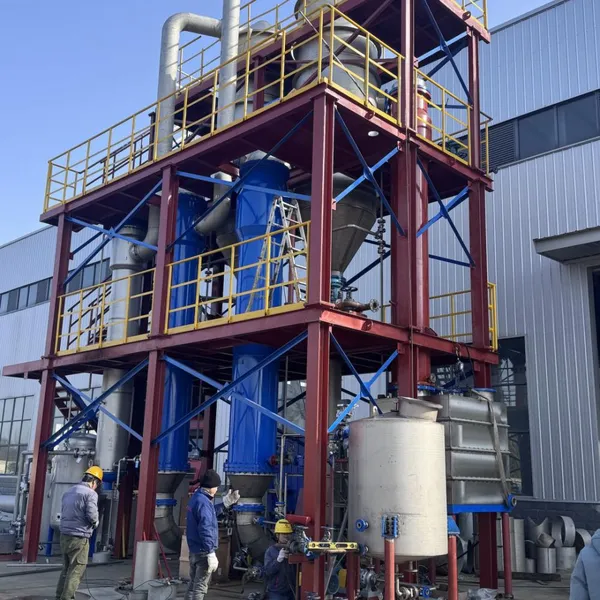
4-Effect TVR Evaporator for Instant Coffee ProductionNegotiableMOQ: 1 Set
-
MVR Evaporator System for Lithium Battery Black Mass Leachate CrystallizationNegotiableMOQ: 1 Set
-
Battery-Grade Nickel Sulfate Hexahydrate Evaporation & Crystallization PlantNegotiableMOQ: 1 Set
-
Waste Hydrochloric Acid Recycling Solution and Calcium Chloride Production SolutionNegotiableMOQ: 1 Set
-
Anhydrous Calcium Chloride Granulation & Drying SystemNegotiableMOQ: 1 Set
-
Skid-Mounted MVR Evaporator SystemNegotiableMOQ: 1 Set
-
MVR Evaporator for Anhydrous Sodium Sulfate (Na₂SO₄) ProductionNegotiableMOQ: 1 Set
-
Ethanol Recovery System (Ethanol Recovery From Waste Liquid Soap)NegotiableMOQ: 1 Set
-
MVR Evaporator for Lithium Sulfate ConcentrationNegotiableMOQ: 1 Set
-
MVR EvaporatorNegotiableMOQ: 1 Set
-
MVR Evaporator for Smelting Wastewater TreatmentNegotiableMOQ: 1 Set