 Business License

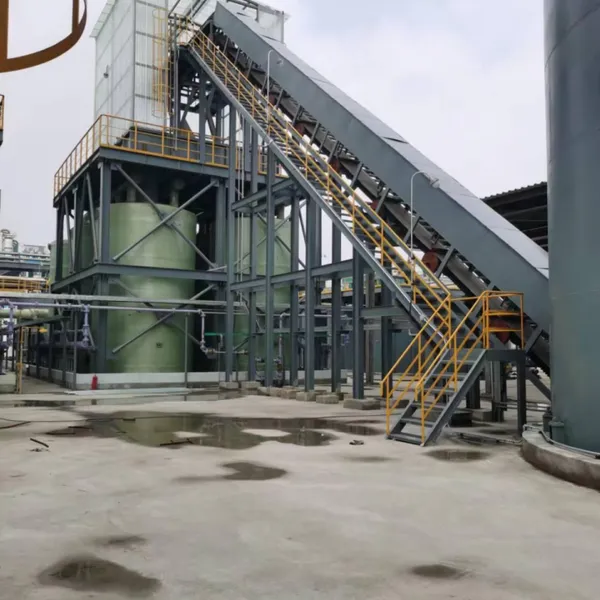
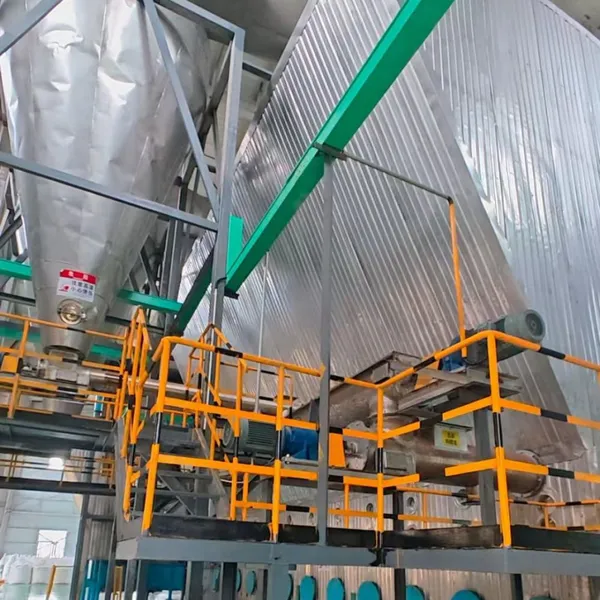
Advantages of Our Two-stage Spray Granulation and Fluidized Bed Dryer System
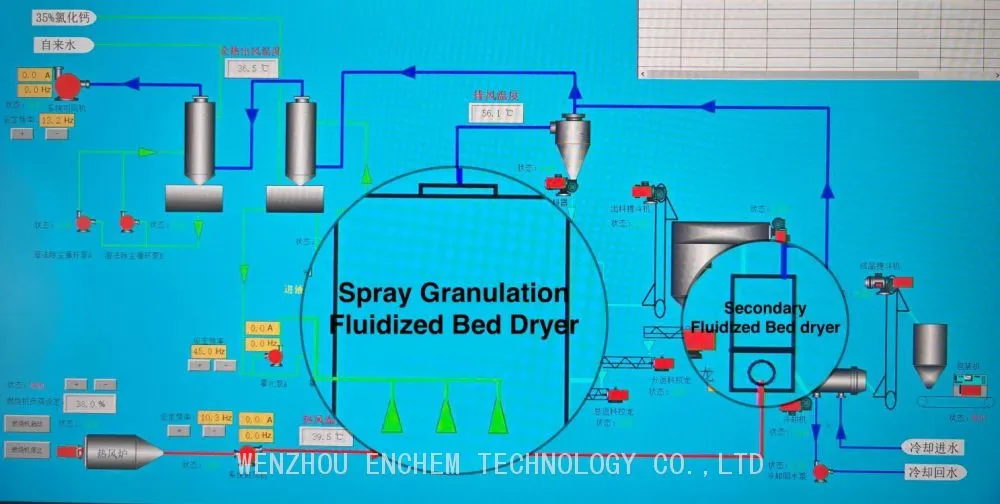
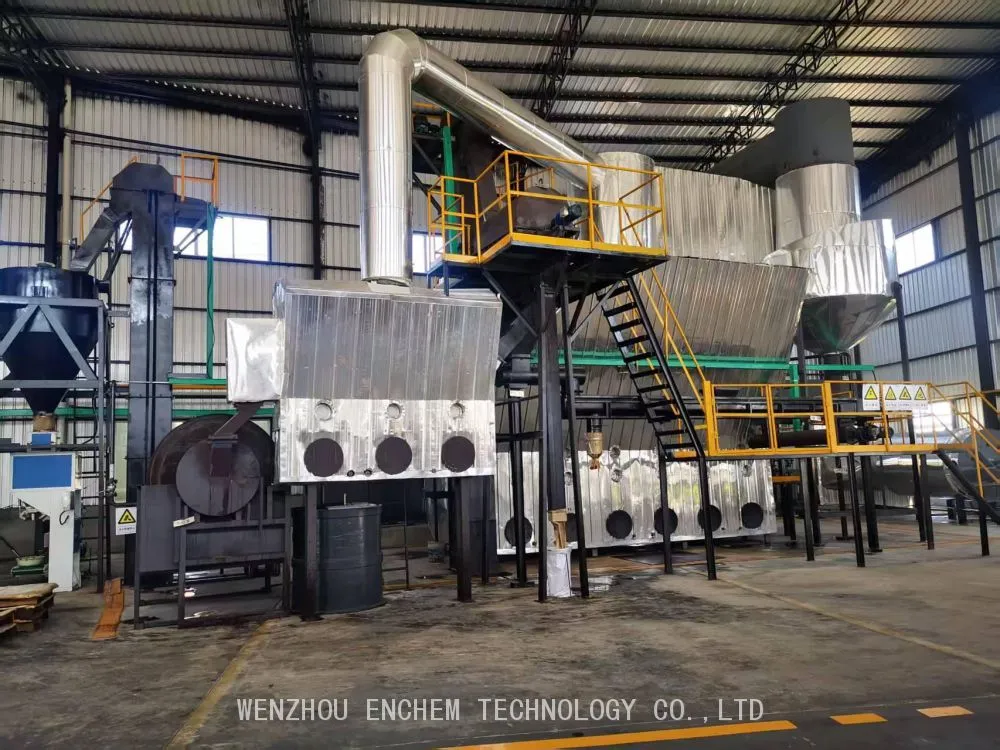
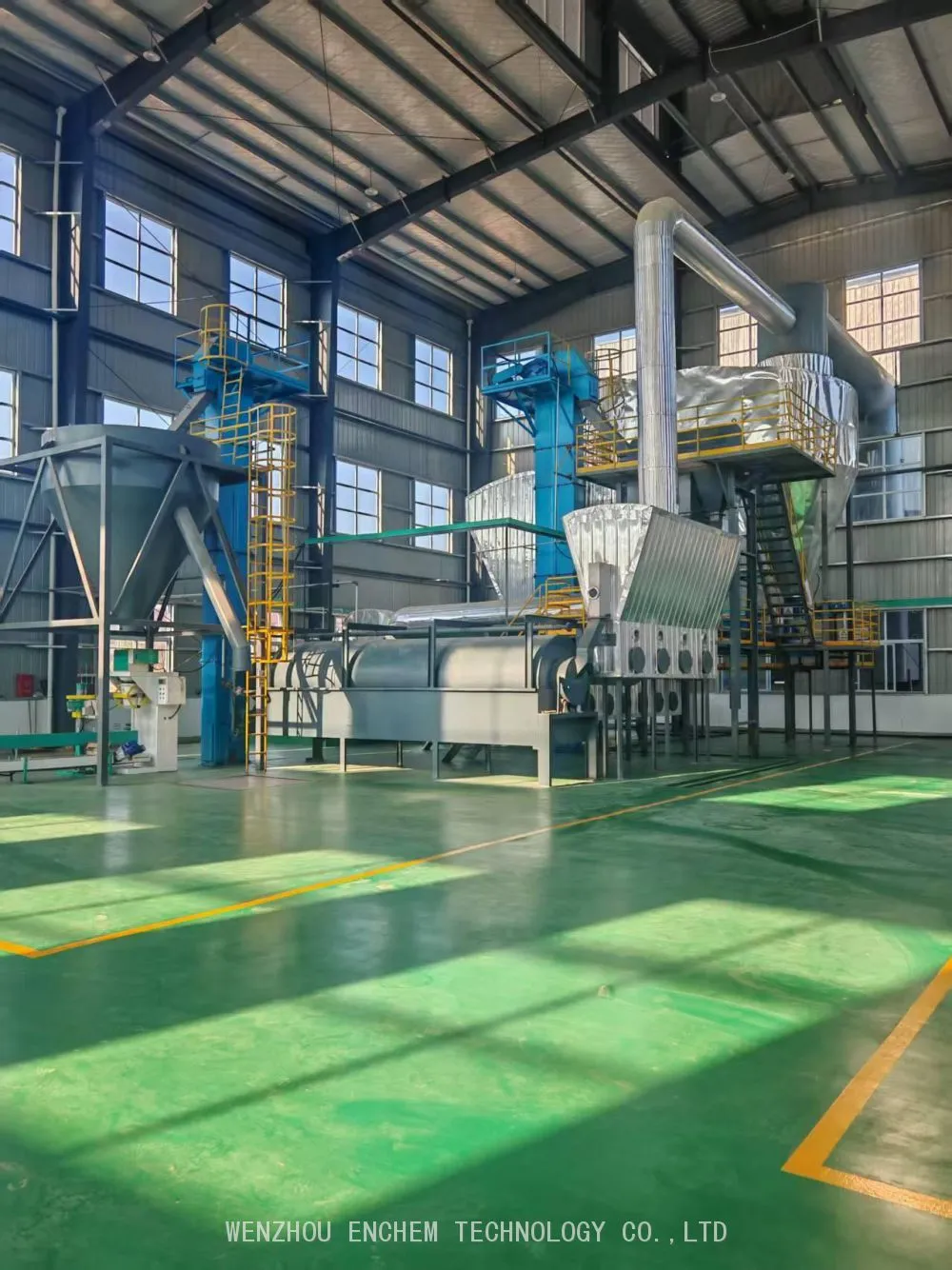
In contrast to typical spray granulation fluidized bed drying systems, our design divides the process into two distinct units: a mian spray granulation fluidized bed and a secondary fluidized bed, enhancing process control and product quality. The system offers the following benefits:
1. Improved Product Yield and Consistency
In a conventional single-stage spray granulation and fluidized bed dryer system, calcium chloride granulation and drying take place within a single unit. After screening:
• ~2/3 of material is rejected and recycled due to inappropriate particle sizes;
• Only ~1/3 qualifies as finished product and moves to the cooling stage.
However, not all the qualified material consistently meet the required final moisture specification before entering the cooling unit, resulting in variability in product quality.
With a secondary fluidized bed:
• Only pre-qualified product enters the secondary fluidized bed dryer
• Final moisture content is consistently achieved before cooling
• Product quality is stabilized and more uniform
2. Reduced Energy Consumption and Equipment Investment
In a conventional single-stage setup, the main dryer must handle 100% of the drying load—including both the recyclable material (~2/3) and the final product (~1/3). To ensure all material meets moisture specifications, the dryer must be:
• Significantly larger, increasing capital expenditure
• Operated at higher temperatures, resulting in greater energy consumption
• More complex, generating more exhaust gas and requiring extensive auxiliary systems
With a secondary fluidized bed:
• The second-stage dryer processes only the ~1/3 of pre-qualified product
• The main dryer can be smaller, simpler, and more energy-efficient
• Total energy consumption and heat load are reduced
• Exhaust gas volume is lower
• Overall system investment and operational costs are significantly optimized
3. Improved System Stability
In a single-stage spray granulation fluidized bed system, one common method to ensure the discharged product meets moisture requirements is to raise the exhaust air temperature. However, this solution introduces several operational challenges:
Problems Associated with High Exhaust Temperatures:
• Reduced droplet adhesion during atomization, resulting in increased dust generation
• Excess dust disrupts granulation, lowering overall product yield
• Cyclone separators and wet scrubbers become overloaded
• System backpressure increases, causing frequent blockages
• More frequent downtime for cleaning and maintenance, reducing system uptime and overall efficiency
With the addition of a secondary fluidized bed:
• The main dryer can operate at a lower, more stable exhaust temperature
• Dust generation and system strain are significantly reduced
Resulting benefits:
• Greater operational stability
• Fewer unplanned shutdowns and maintenance interruptions
• More consistent, continuous, and reliable production
Conclusion
By dividing the spray granulation and drying process into two stages, our system overcomes the limitations of conventional single-stage designs. It ensures higher product yield and consistency, significantly reduces energy and capital costs, and enhances overall system reliability. This makes it an ideal solution for industrial applications demanding stable, efficient, and high-quality production.
Recently Posted
-
Comparison of DTB, Oslo, and FC Crystallizers: Principles, Characteristics, and Applications
August 12, 2026AbstractIndustrial crystallization is widely used in chemical, fertilizer, pharmaceutical, and wastewater treatment industries for Read More
 -
Liquid Ring Vacuum Pumps in Evaporation System
August 12, 2026AbstractVacuum systems play a crucial role in industrial evaporation processes by reducing operating pressure and enabling low-tem
Read More -
Achieving Low Residual Moisture Content in Industrial Salt Crystallization Processes
August 12, 2026The Importance of Low Residual Moisture ContentIn industrial crystallization and salt production processes, achieving low residual
Read More -
Successful Commissioning of Instant Coffee Liquor 4-Effect Evaporator Upgrading Project in Indonesia
August 11, 2026We are proud to announce the successful commissioning of an Instant Coffee Liquor 4-effect evaporator upgrading project in Indones
Read More

Contact Us
Recommended Products
-
 MVR Distillation TechnologyNegotiableMOQ: 1 Set
 -
Potassium-Sodium Separation EvaporatorNegotiableMOQ: 1 Set
-
Barium Chloride Evaporation and Crystallization System for Industrial ProductionNegotiableMOQ: 1 Set
-
Industrial Multi-Effect Evaporation Crystallization System for Barium Chloride ProductionNegotiableMOQ: 1 Set
-
Five-effect Falling Film Evaporator for HFCS ConcentrationNegotiableMOQ: 1 Set
-
Hybrid Calcium Chloride Concentration Evaporator SystemNegotiableMOQ: 1 Set
-
Containerized Low-Temperature Heat Pump Crystallization EvaporatorNegotiableMOQ: 1 Set
-
Containerized Low-Temperature Heat Pump Concentration EvaporatorNegotiableMOQ: 1 Set
-
Containerized MVR EvaporatorNegotiableMOQ: 1 Set
-
4-Effect TVR Evaporator for Instant Coffee ProductionNegotiableMOQ: 1 Set
-
MVR Evaporator System for Lithium Battery Black Mass Leachate CrystallizationNegotiableMOQ: 1 Set
-
Battery-Grade Nickel Sulfate Hexahydrate Evaporation & Crystallization PlantNegotiableMOQ: 1 Set
-
Waste Hydrochloric Acid Recycling Solution and Calcium Chloride Production SolutionNegotiableMOQ: 1 Set
-
Anhydrous Calcium Chloride Granulation & Drying SystemNegotiableMOQ: 1 Set
-
Skid-Mounted MVR Evaporator SystemNegotiableMOQ: 1 Set
-
MVR Evaporator for Anhydrous Sodium Sulfate (Na₂SO₄) ProductionNegotiableMOQ: 1 Set
-
Ethanol Recovery System (Ethanol Recovery From Waste Liquid Soap)NegotiableMOQ: 1 Set
-
MVR Evaporator for Lithium Sulfate ConcentrationNegotiableMOQ: 1 Set
-
MVR EvaporatorNegotiableMOQ: 1 Set
-
MVR Evaporator for Smelting Wastewater TreatmentNegotiableMOQ: 1 Set