 Business License

Optimizing Live Steam Economy in MEE Systems
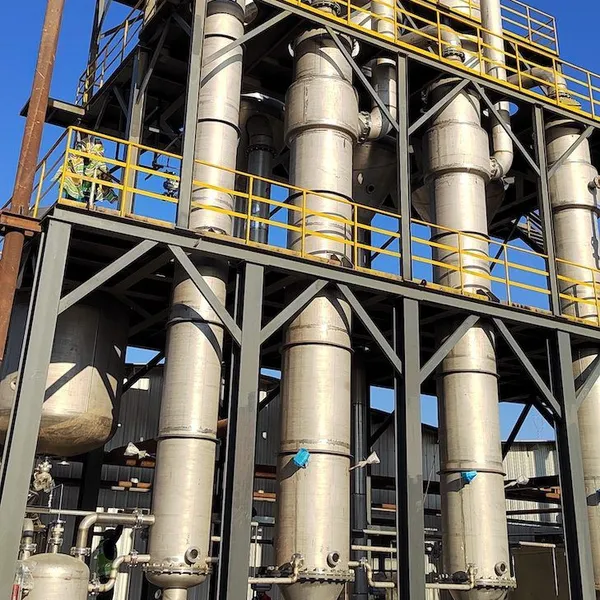
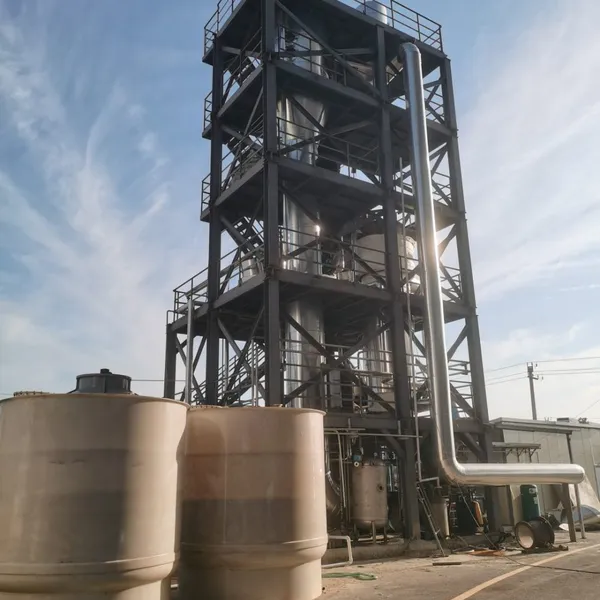
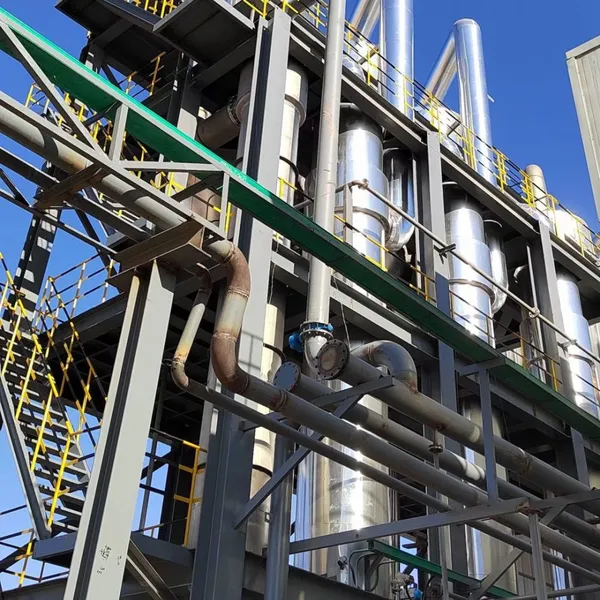
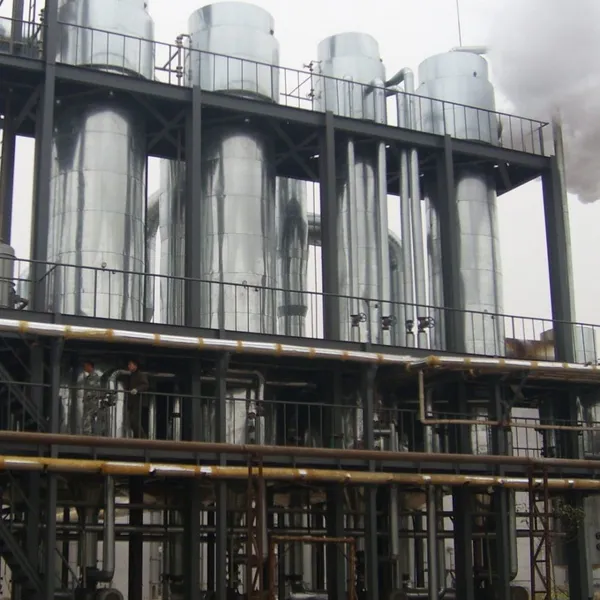
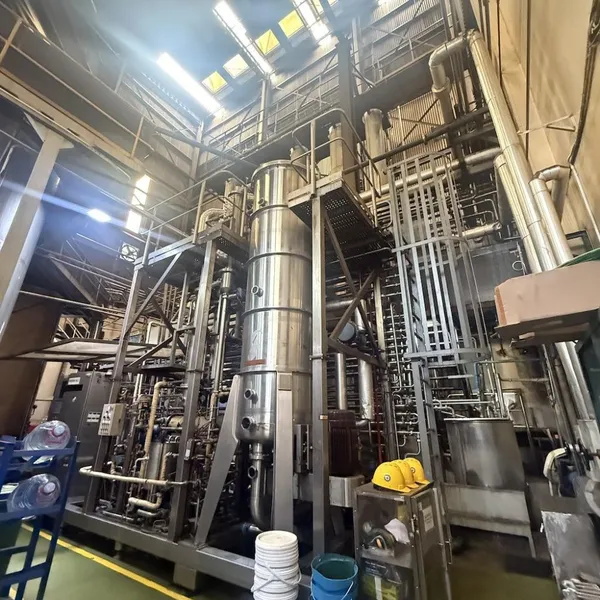
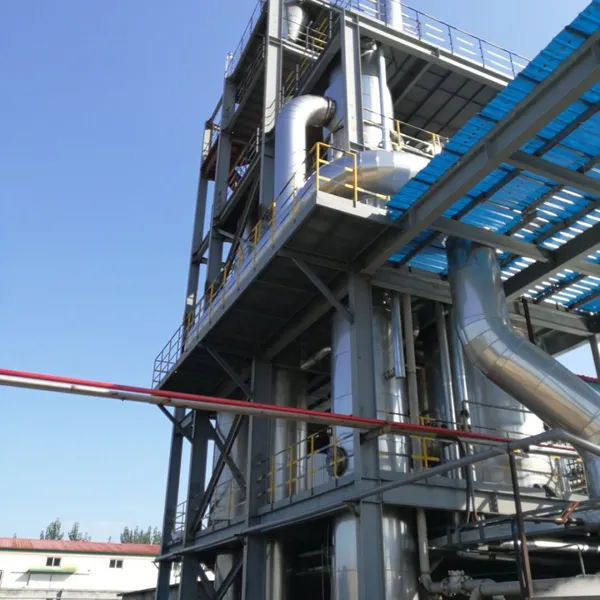
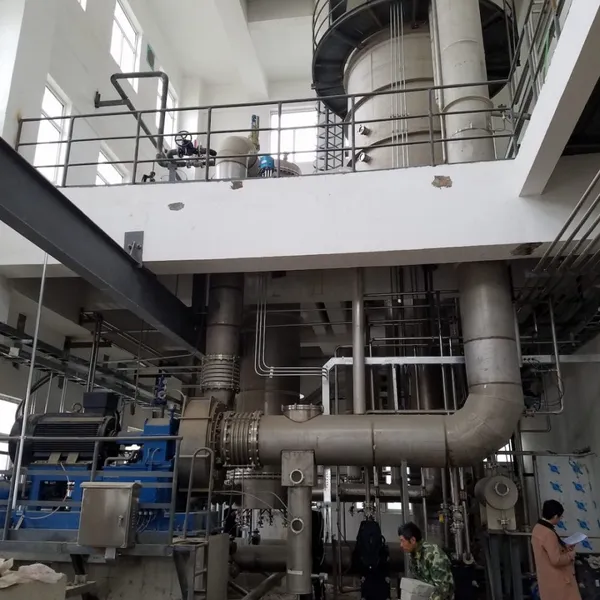
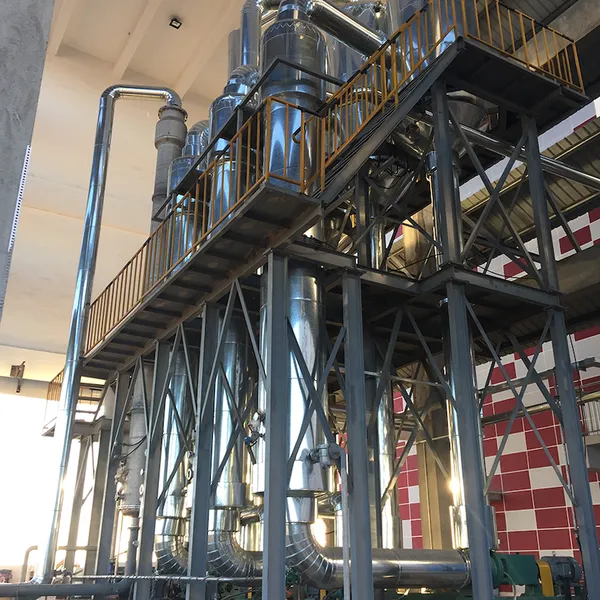
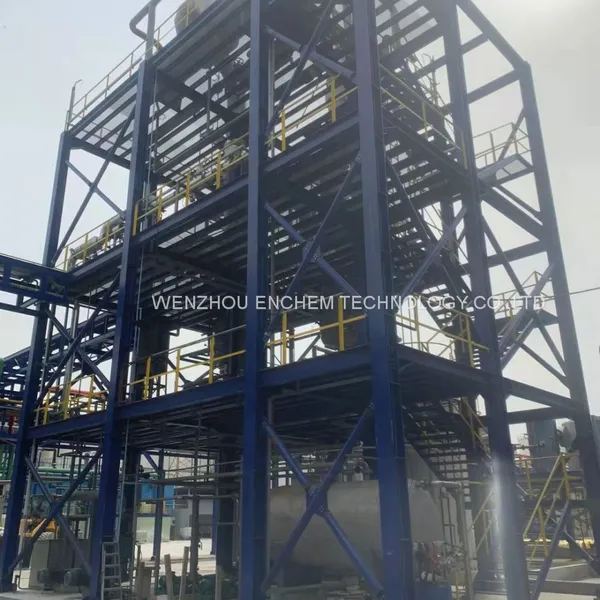
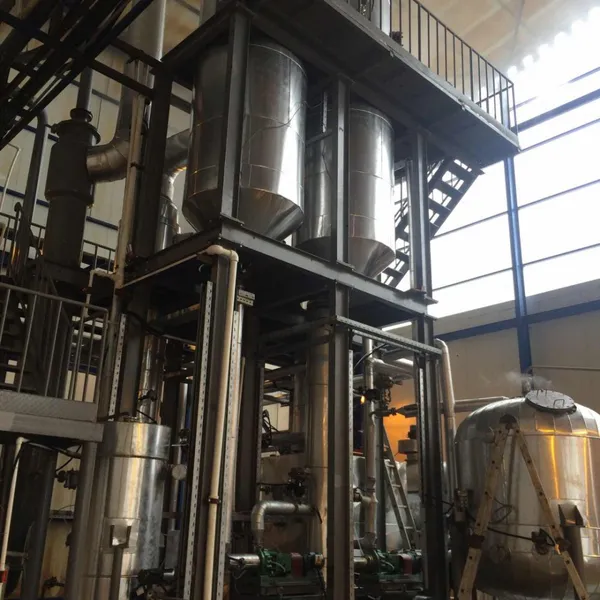
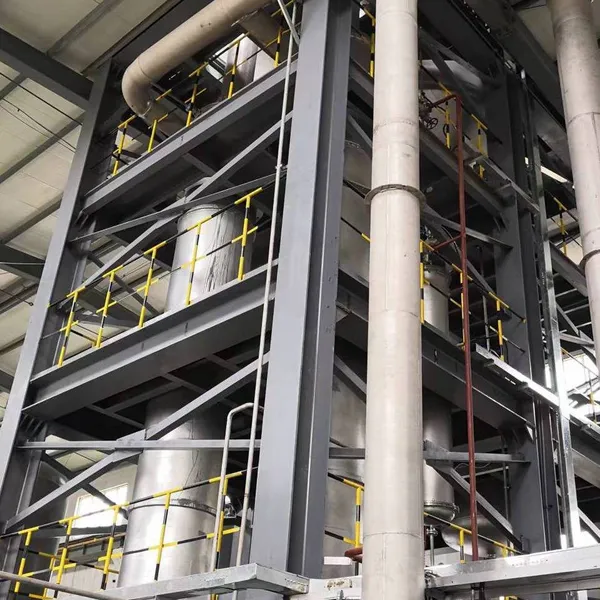
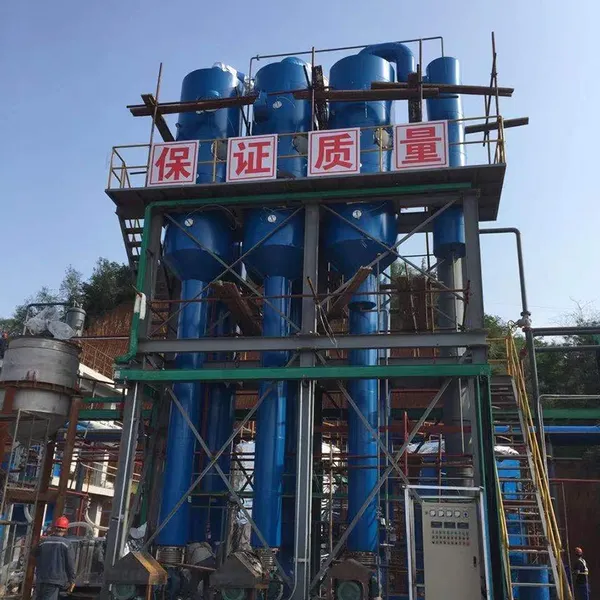
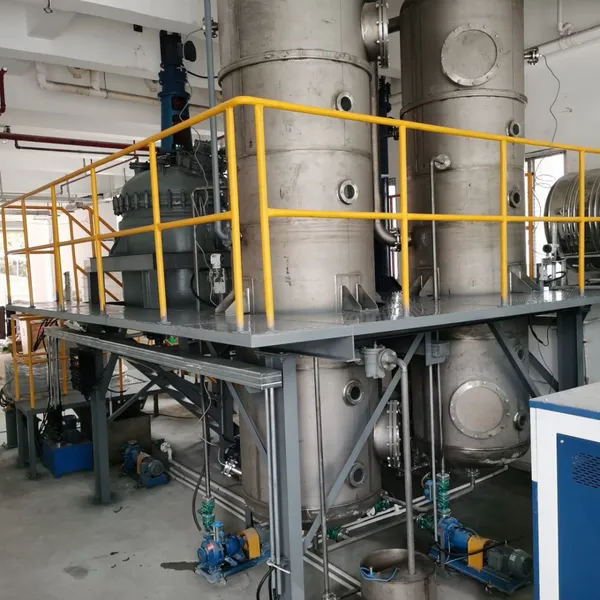
Multiple Effect Evaporation (MEE) System
In industrial evaporation processes, reducing energy consumption while maintaining stable operation is a key challenge for process engineers and plant operators. A Multiple Effect Evaporation (MEE) system is one of the most widely applied energy-saving evaporation technologies, designed to maximize heat utilization through multi-stage vapor recovery.
An MEE system consists of multiple evaporator effects arranged in series. The secondary vapor generated from one effect is reused as the heating medium for the next effect, allowing the latent heat contained in the vapor to be repeatedly utilized. This cascading heat recovery significantly reduces fresh steam consumption compared with conventional single-effect evaporation.
Due to its excellent balance between investment cost, energy efficiency, and operational reliability, MEE technology is widely used in industries such as chemical processing, food and beverage, pharmaceutical production, wastewater treatment, environmental protection, and salt recovery.
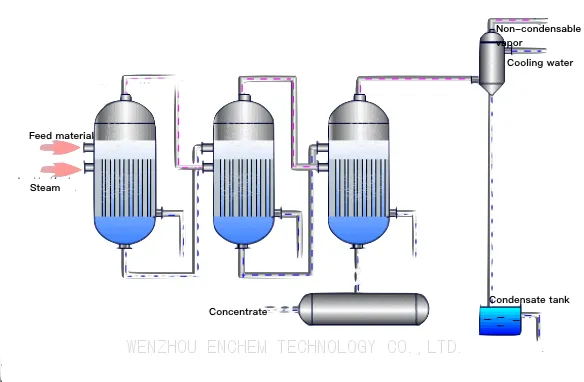
Live Steam Economy of MEE Evaporator
The live steam economy of a multiple-effect evaporator is a key performance indicator that reflects how effectively live steam is utilized to generate evaporation across all effects. It is defined as the ratio of the total mass of water evaporated (W) to the mass of live steam consumed (D):
Steam Economy = W / D
Where:
W = total water evaporated
D = live steam consumed
Typical Steam Economy Values for MEE Systems

Interpretation
A higher W/D ratio indicates more efficient utilization of live steam and improved thermal performance.
The fundamental mechanism behind this improvement is the progressive reuse of secondary vapor, where the vapor from one effect serves as the heating medium for the next.
As the number of effects increases, steam economy improves significantly; however, the increase is non-linear and shows diminishing returns at higher effect numbers.
In practical design, this trade-off must be balanced against increased capital cost, complexity, and operational control requirements.
Key Factors Affecting MEE Steam Economy
Achieving high steam economy requires not only selecting an appropriate number of effects but also optimizing the entire evaporation system design and operation.
1. Optimization of Effect Number
Increasing the number of evaporation effects allows greater reuse of latent heat and improves overall thermal efficiency. However, excessive effects may result in limited economic benefits due to higher capital investment and reduced temperature driving force between effects.
A comprehensive technical and economic analysis is essential to determine the optimal configuration.
2. Optimized Temperature and Pressure Distribution
Proper design of temperature and pressure profiles between effects ensures sufficient heat transfer driving force while maximizing heat recovery.
Operating evaporators under suitable vacuum conditions can reduce boiling temperatures, which is particularly beneficial for heat-sensitive materials and high-concentration solutions.
3. Reduction of Heat and Vapor Losses
To maintain high evaporation efficiency, the system should minimize unnecessary energy losses through:
Effective thermal insulation;
Reliable sealing systems;
Optimized condensate recovery;
Proper vapor management.
These measures help preserve available thermal energy and improve overall system performance.
4. Integration with Vapor Recompression Technologies
Combining MEE systems with vapor recompression technologies can further enhance energy efficiency.
MVR (Mechanical Vapor Recompression): Uses mechanical compressors to upgrade secondary vapor and reuse it as heating steam.
TVR (Thermal Vapor Recompression): Uses high-pressure steam ejectors to recover and reuse part of the secondary vapor.
These technologies can significantly reduce fresh steam consumption and improve the overall energy performance of evaporation systems.
5. Effective Feed Preheating and Heat Integration
Utilizing available heat sources, such as:
Condensate;
Flash vapor;
Secondary vapor;
for feed preheating can reduce the thermal load on the evaporator and improve energy utilization.
6. Stable Operation and Process Control
Maintaining stable operating conditions is essential for achieving the designed evaporation performance.
Important operating parameters include:
Proper liquid level control;
Stable circulation rate;
Accurate temperature and pressure control;
Optimized vapor-liquid separation.
Stable operation helps prevent fluctuations in evaporation capacity and improves long-term reliability.
7. Regular Cleaning and Preventive Maintenance
Fouling on heat transfer surfaces can significantly reduce evaporation efficiency. Regular maintenance activities, including:
Heat exchanger cleaning;
Pump and valve inspection;
Instrument calibration;
are essential to maintain heat transfer performance and ensure continuous operation.
8. Uniform Feed Distribution
Proper feed distribution across heating surfaces improves heat transfer efficiency, reduces localized fouling, and ensures stable vapor generation.
Optimized distribution design is particularly important for high-viscosity materials and solutions with scaling tendencies.
Conclusion
Multiple Effect Evaporation (MEE) technology provides an efficient and reliable solution for reducing steam consumption and improving energy utilization in industrial evaporation processes.
By combining optimized system design, effective heat recovery, advanced control strategies, and integration with MVR or TVR technologies, MEE systems can achieve:
Higher steam economy;
Lower operating costs;
Reduced energy consumption;
Improved process sustainability.
With extensive experience in evaporation system design and process optimization, we provide customized MEE solutions tailored to different industries and process requirements, helping customers achieve efficient, reliable, and sustainable production.
Recently Posted
-
Benefits of a Secondary Fluidized Bed in a Calcium Chloride Spray Granulation Fluidized Bed Dryer
September 1, 2026Unlike conventional calcium chloride spray granulation fluidized bed dryer systems, our process incorporates a secondary fluidized Read More
 -
Application of Evaporator Technology in Zero Liquid Discharge (ZLD) Systems for Industrial Wastewate
September 1, 2026Industrial Wastewater Treatment SolutionsIndustrial wastewater is generated in a wide range of manufacturing processes and often c
Read More -
Comparison: MVR Evaporator vs. Multi-Effect Evaporator (MEE)
August 31, 2026MVR Evaporator OverviewMVR (Mechanical Vapor Recompression) evaporator is a high-efficiency, energy-saving evaporation system that
Read More -
MVR Evaporation and Crystallization
August 31, 2026What is MVR (Mechanical Vapor Recompression)?MVR (Mechanical Vapor Recompression) is an advanced, energy-efficient evaporation tec
Read More

Contact Us
Recommended Products
-
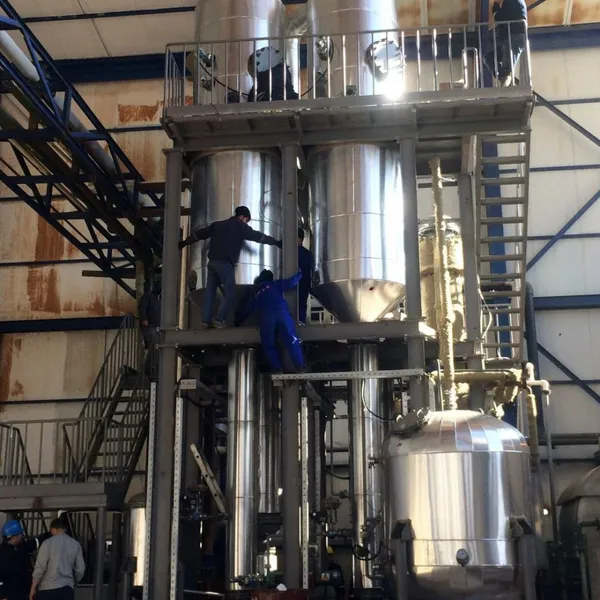
 Titanium Triple-effect Evaporator for Lithium Battery RecycleNegotiableMOQ: 1 Set
 -
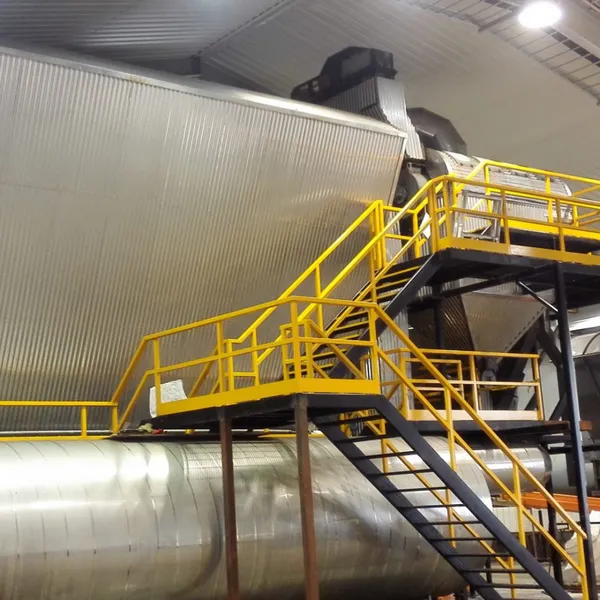
Four-effect Falling Film Evaporator for Coffee Extract ConcentrationNegotiableMOQ: 1 Set
-
MVR Evaporator for Dyeing Wastewater TreatmentNegotiableMOQ: 1 Set
-
MVR Evaporator for Landfill Leachate TreatmentNegotiableMOQ: 1 Set
-
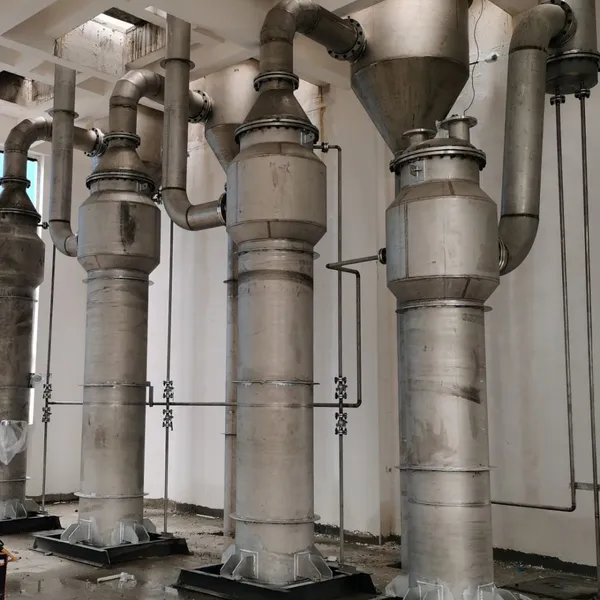
Triple-effect Forced Circulation Evaporator for Cobaltous Sulfate RecoveryNegotiableMOQ: 1 Set
-
Double-effect Countercurrent and Falling Film Evaporator for Caustic Soda ConcentrationNegotiableMOQ: 1 Plant
-
Double-effect Forced Circulation Evaporator for Calcium Chloride ConcentrationNegotiableMOQ: 1 Set
-
MVR Evaporator for Smelting Wastewater TreatmentNegotiableMOQ: 1 Set
-
Triple-effect Forced Circulation Evaporator for High Salinity Wastewater TreatmentNegotiableMOQ: 1 Set
-
Double-effect Central Circulation Evaporator for Metallurgy Effluent TreatmentNegotiableMOQ: 1 Set
-
Triple-effect Forced Circulation Evaporator for Mix Salt Wastewater TreatmentNegotiableMOQ: 1 Set
-
MVR Evaporator for Bio-pharmaceutical Wastewater TreatmentNegotiableMOQ: 1 Set
-
Calcium Chloride Solution Preparation and Refining PlantNegotiableMOQ: 1 Set
-
Vacuum Decompression Concentrator (Tank)NegotiableMOQ: 1 Set
-
Ammonium Sulfate Crystalline Powder Evaporation and Drying PlantNegotiableMOQ: 1 Set